
.webp)
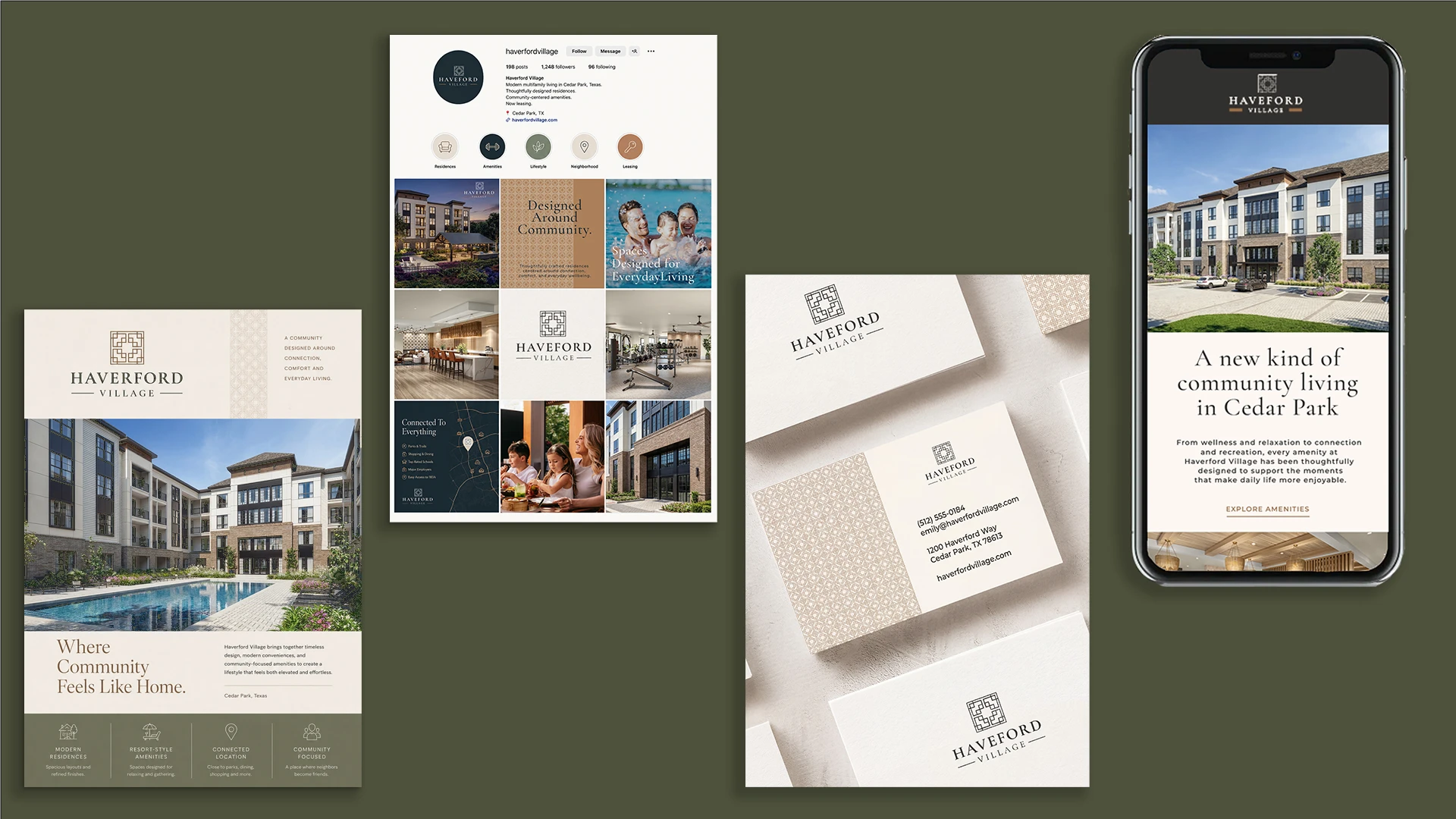
1. Brand Identity
Every strong pre-construction marketing campaign begins with a clear identity.
Before a single rendering is created or a website goes live, the project needs to know how it will be positioned in the market — its personality, its promise, and its audience.
A complete real estate brand typically includes project naming, logo design, color palette, typography, brand guidelines, and messaging. These elements create consistency across every future marketing touchpoint and establish a recognizable identity from day one.
2. Project Website
For most prospective buyers and investors, the project website is their first encounter with the development.
An effective real estate website communicates the vision while delivering essential information in a clear, engaging format. Core content typically includes a project overview, location, amenities, residences or floor plans, image galleries, animations, interactive experiences, and contact forms.
The website often becomes the central hub around which all other marketing efforts are organized.
3. Architectural Renderings
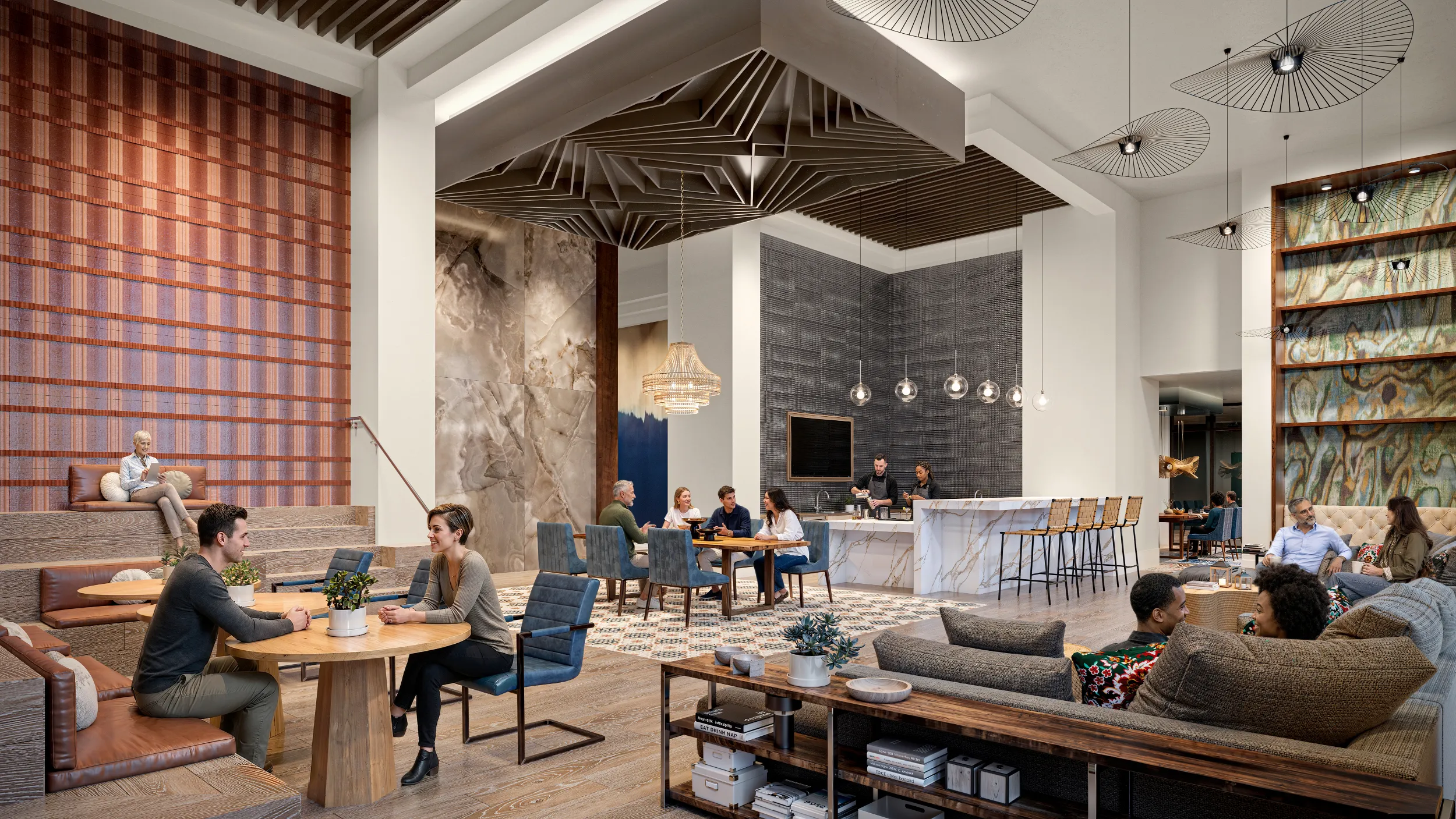
Architectural renderings remain one of the most powerful assets in pre-construction real estate marketing.
They transform technical drawings into compelling visual experiences that buyers, investors, and stakeholders can immediately understand and connect with. A typical rendering package includes exterior perspectives, aerial views, streetscape views, amenity spaces, residential interiors, and lifestyle imagery.
The most effective architectural renderings do more than show what will be built. They communicate atmosphere, materiality, and the emotional experience of being there.
4. Lifestyle Content
People do not buy buildings. They buy experiences.
Lifestyle-focused visual content helps future residents imagine how they will live, work, relax, and connect within the development — residents using amenities, social gathering spaces, wellness environments, outdoor areas, and the everyday moments that make a place feel like home.
Lifestyle imagery is increasingly essential across websites, social media campaigns, brochures, and digital advertising. It is often the content that creates the strongest emotional response.
5. Architectural Animation
While renderings capture individual moments, architectural animation communicates the complete experience.
A well-produced walkthrough video reveals how spaces connect, how natural light moves through the building, how amenities integrate into daily life, and how the project fits within its surroundings. It transforms a collection of images into a coherent narrative.
Developers use animations for project launches, investor presentations, sales centers, websites, social media campaigns, and industry events. A strong animation can accomplish what dozens of static images cannot.
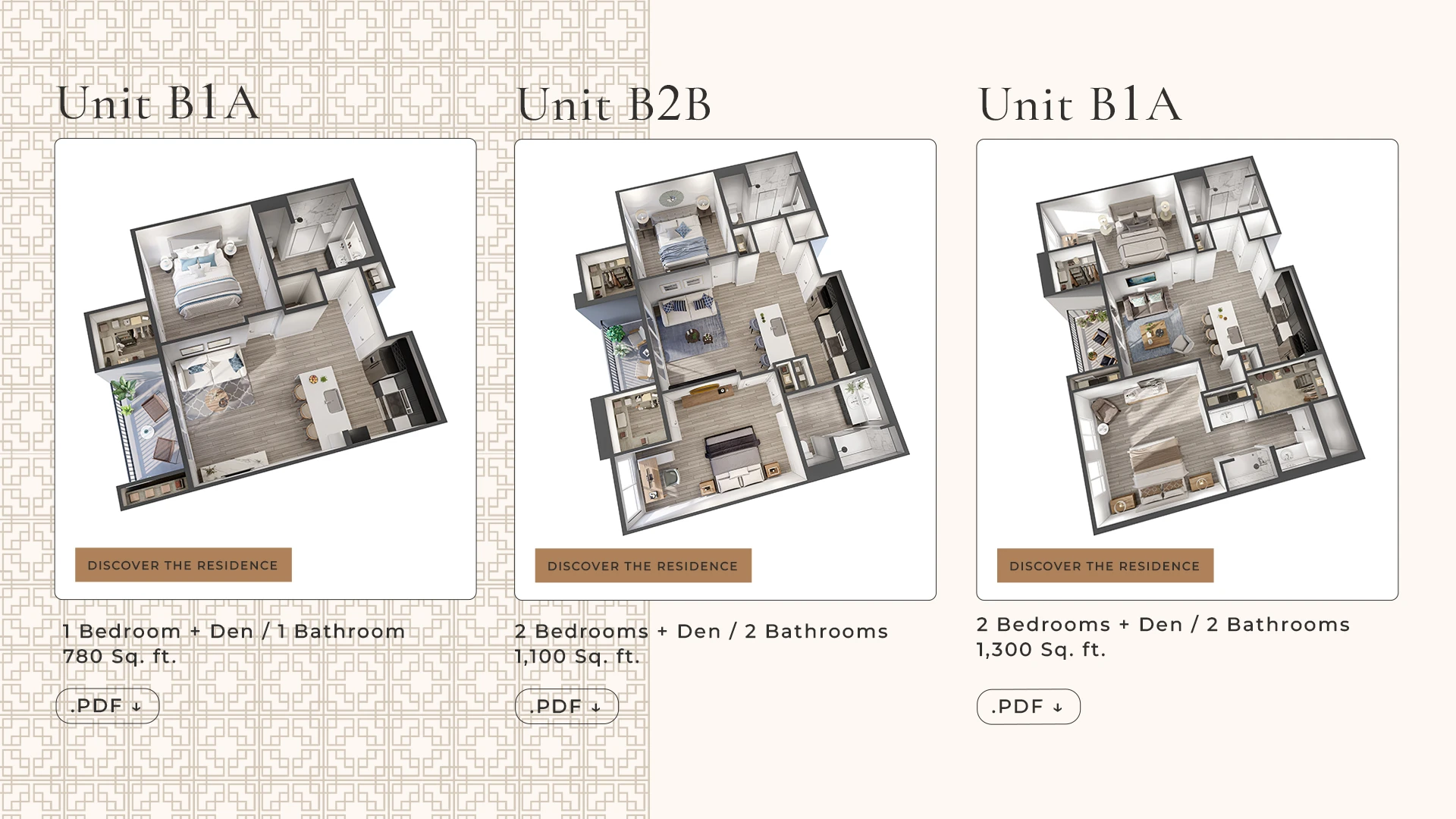
6. Floor Plans and Site Plans
Emotional connection matters — but buyers also need practical information.
Clear, well-designed floor plans and site plans help users understand layouts, unit types, circulation, and project organization. These assets remain essential for both residential and multifamily developments.
When designed thoughtfully, they communicate functional clarity while reinforcing the project's overall visual identity.
7. Brochures and Sales Materials
Printed and digital sales collateral continue to play an important role throughout the pre-construction process.
Typical materials include project brochures, fact sheets, presentation decks, community maps, investor packages, and sales center graphics. These assets ensure that every stakeholder — whether encountered at an event, through a sales team, or via email — receives consistent, professional information about the project.
8. Virtual Reality Walkthroughs
VR walkthroughs have become one of the most valuable sales and presentation tools in modern real estate marketing.
They allow buyers, investors, and stakeholders to explore residences, amenities, and common areas before construction begins — gaining an intuitive understanding of scale, proportions, spatial quality, and views that static images cannot fully convey.
For many developments, virtual reality experiences have become a defining feature of the sales center and a key differentiator in competitive markets.

9. Social Media Content
Successful marketing campaigns require a continuous flow of content. Projects that prepare social media assets early can build awareness and engagement long before completion.
Content may include renderings, animation clips, lifestyle imagery, construction updates, project milestones, amenity highlights, and behind-the-scenes moments. Social platforms have become one of the primary channels for maintaining visibility and building an audience throughout the development cycle.


Bringing Everything Together
The most successful real estate developments do not rely on a single marketing asset. They build a complete ecosystem of branding, visualization, animation, and immersive experiences that work together to communicate a consistent, compelling vision.
From the first logo concept to the final sales presentation, every touchpoint should reinforce the same story — because before a project can be built, leased, or sold, people first need to understand what it will become.
The right marketing assets make that vision tangible long before construction begins.